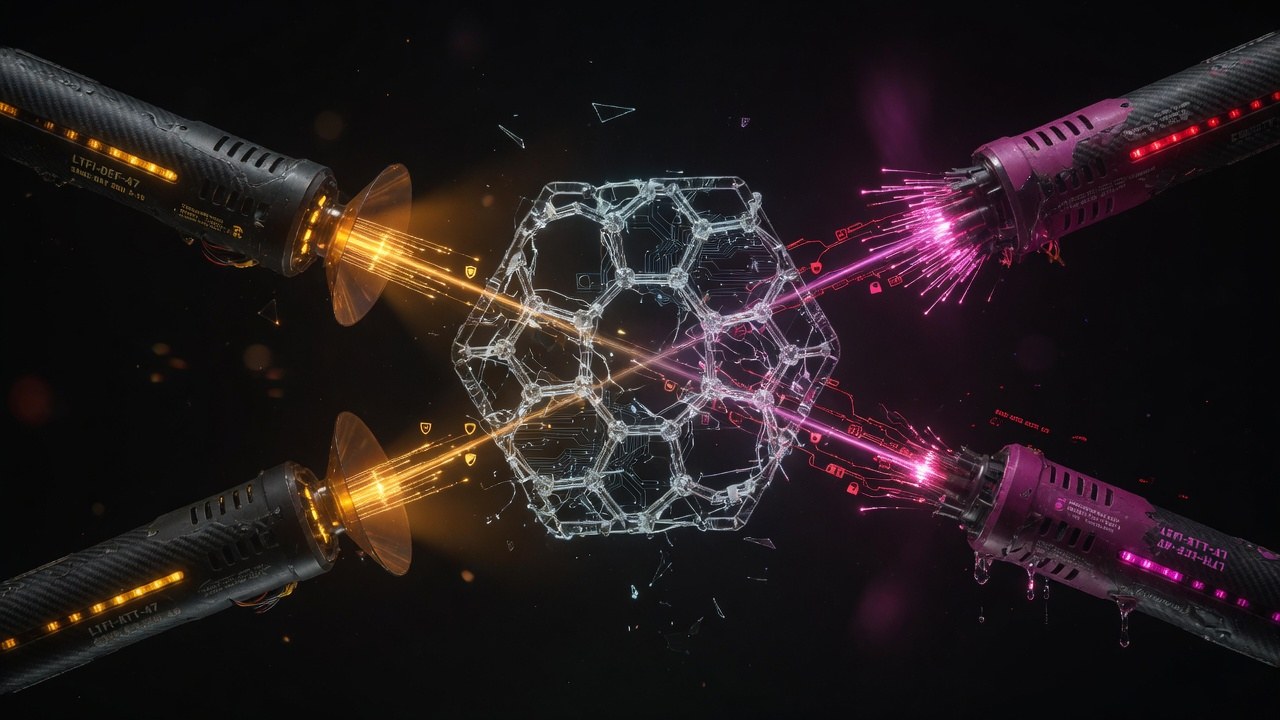
Agentic Pentesting Just Became a Same-Day SKU — But Attackers Bought the Same Autonomous Testers, and Your Fix Still Takes Six Weeks
When both sides run autonomous scanners around the clock, the finding is commodity. The team that can close it before it's exploited is the whole game.
In June 2026, autonomous penetration testing stopped being a service you book and became a product you buy on demand. Several vendors shipped tools that point AI agents at your web apps, APIs, mobile surfaces, and internet-facing assets, then hand back findings the same day. The agents plan multi-step attacks, chain small weaknesses into real attack paths, and adapt with almost no human in the loop. One launch was already running inside large enterprises on day one.
That is a genuine change in how fast vulnerabilities get found. It is also only half the story, and the less interesting half.
The same agent architecture is already in attacker hands. A defensive orchestration tool released earlier this year wired together more than 150 security utilities for autonomous testing. Within hours, criminal operators were using it against fresh vulnerabilities, and reported cutting their time-to-exploit from days to under ten minutes. Google's threat intelligence team later confirmed a state-linked group pairing that tooling with a commercial AI model for automated vulnerability discovery. By early 2026 the same tool was tied to attacks on more than 600 network appliances across 55 countries.
So the parallel in the headline is not a metaphor. Both sides are running the same class of software, sometimes literally the same binary. When discovery is automated, continuous, and cheap for everyone, the finding itself is no longer where the advantage lives.
The clock the finding runs against
Here is the number that reframes everything. Mandiant's M-Trends 2026 puts the mean time-to-exploit at negative seven days for 2025. The average vulnerability is now being attacked before a patch exists. For context, that same window was 63 days in 2018 and only crossed zero in 2024. Google's threat intelligence group reached the same conclusion from independent data.
Now put the fix side next to it. Industry measures of time to remediate a critical vulnerability still sit in the range of four to five months. Even for the vulnerabilities that regulators flag as actively exploited, defenders take a median of roughly 55 days to patch half the list. Attackers need hours. Verizon's 2025 breach report found vulnerability exploitation now drives one in five breaches, up about a third year over year, and a majority of breaches still involve a flaw for which a patch was already available.
Regulators see the same gap. In May 2026, the U.S. cyber agency signaled it is considering cutting its default remediation deadline for known-exploited vulnerabilities from two weeks to three days, a direct response to how fast AI is compressing the attack timeline. It already handed federal agencies a three-day window to patch a critical unauthenticated remote-code-execution flaw in a widely used platform. Working exploit code went public two days after disclosure.
Read those together and the conclusion is uncomfortable. A same-day scanner that hands you 200 findings you cannot act on for six weeks has not shrunk your exposure. It has measured it more precisely, and possibly made it larger. You now know, in writing, exactly how long each open door stays open.
More findings is not the fix
The reflex when a new scanning tool ships is to buy the scanner. That instinct is a year out of date. Autonomous discovery is becoming commodity infrastructure available to your defenders and your attackers on roughly equal terms. The scarce resource is the standing capacity to turn a finding into something that is fixed and verified, fast enough to matter.
Two facts make this harder than raw speed.
First, autonomous agents are noisy. When Anthropic disclosed the first publicly confirmed AI-orchestrated espionage campaign in late 2025, its own analysis noted the AI frequently overstated findings and sometimes fabricated results, claiming access that did not actually work. The commodity-agent wave inherits that flaw. Velocity without validation is just a faster way to fill a ticket queue with things that may not be true.
Second, most findings do not matter, and teams routinely fix the wrong ones first. Only a small fraction of high-severity vulnerabilities ever see a real exploitation attempt, while a meaningful share of the flaws that do get exploited carry only medium scores. A minority of your findings account for most of your actual business risk. So the problem is not only fix speed. It is fix aim. Sorting a backlog by severity and working top down burns your limited capacity on the wrong doors.
What actually closes the gap
The operating model that made sense when exploitation took two months is the one that fails now: an annual point-in-time assessment feeding a multi-week remediation backlog. Assess once, prioritize by raw severity, patch after disclosure. Every step of that assumes time you no longer have.
The model that holds up has three parts welded together. Continuous assessment, so findings arrive as reality changes rather than once a year. Validation and prioritization, so you act on the small set of things that are both real and exploitable instead of the whole flood. And a managed pipeline with a standing team that actually performs the remediation, on infrastructure built to be changed quickly and safely.
This is the ground LTFI is built on. Every client runs on dedicated, isolated infrastructure with automated patching, default-deny firewalls, and enforced hardening baked in, not bolted on afterward. The security platform behind it uses more than 25 assessment agents across seven specialized departments, orchestrating over 500 integrated tools through natural language, with each deployment air-gapped and isolated so one customer's testing never touches another's data. The point of that stack is not to generate more findings. It is to close the loop, because the same team that finds the issue maintains the system that gets fixed.
When both sides run the same autonomous testers, discovery is a draw. The organizations that stay ahead are the ones where a finding does not become a longer backlog. It becomes a change, shipped and verified, before the window closes.